Yes, deer repellents work. Scent and taste repellents, applied to the plants deer target and reapplied on a consistent schedule, reliably reduce browsing damage on Cincinnati area properties. What they do not do is work from a single application, protect growth that appears after spraying, or permanently remove deer from a neighborhood. Results vary with deer pressure, weather, plant growth and application schedule.
That is the short answer. The longer answer explains why the same product can save one yard’s hostas and “do nothing” two streets over, and it almost always comes down to how the repellent was used, not what was in the bottle.
How Do Deer Repellents Actually Work?
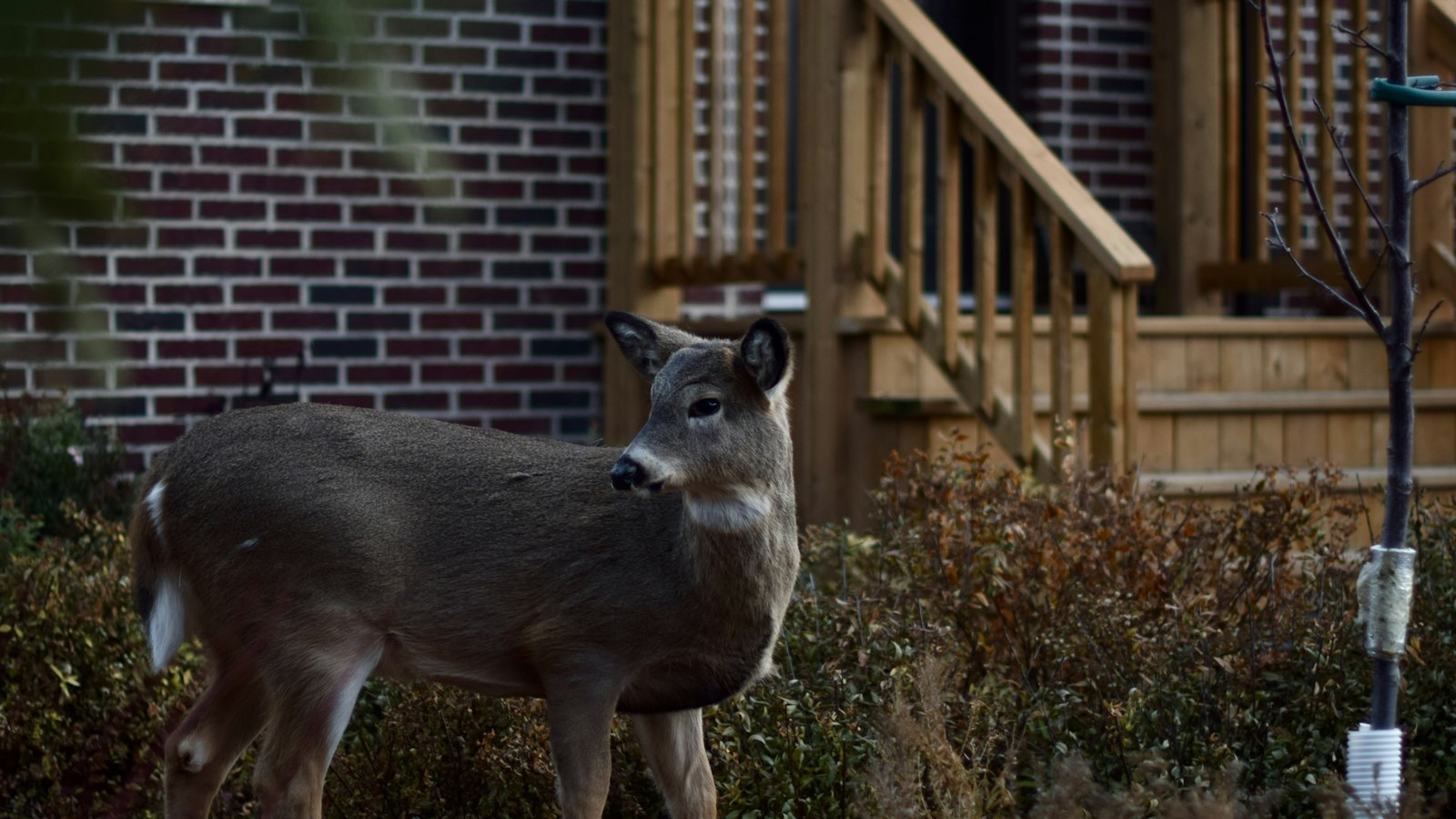
Deer make feeding decisions with their nose first and their tongue second. A whitetail’s sense of smell is many times more sensitive than ours, and it evaluates every bed it walks through on the same evening pass. Scent and taste repellents take advantage of that. An egg-based repellent develops a sulfur scent as it cures on the foliage that reads as spoiled or risky to a deer, and anything it samples anyway tastes wrong enough to drop.
The key idea is that a repellent does not build a wall. It changes a comparison. A deer standing in your front bed is choosing between your treated hostas and the untreated plantings, field edges and woodlots nearby. Treatment tips that choice away from your yard, night after night, until walking past your property becomes the habit.
That is also why “repellent” is the honest word for what we do at Stag Stop. Our deer repellent spraying in Cincinnati is a deterrent and landscape protection service. We make your plants a bad meal, and deer go find a better one somewhere else.
Why Do So Many Homeowners Say Repellents Failed?
When someone in Loveland or Anderson Township tells us a repellent did not work, we ask three questions, and the answer is almost always hiding in one of them.
Was it reapplied, or sprayed once? A repellent bonds to the leaf surface it lands on. It weathers, it degrades in sun and rain, and after several weeks the scent fades below what a deer notices. One application in May protects nothing in July.
What happened after it rained? A hard soaking rain, the kind Southwest Ohio gets all spring, can strip a fresh application before it fully bonds. If nobody came back to re-treat, the yard spent the next month effectively unprotected while the homeowner believed it was covered.
Did the plant grow? This is the sneaky one. Repellent protects the foliage that existed on the day it was applied. Hostas unfurling new leaves, daylilies pushing scapes, arborvitae putting on soft new tips: all of that comes in clean and unprotected. Deer eat the new growth, the homeowner sees fresh damage on a “treated” plant, and the product gets the blame.
None of those are product failures. They are schedule failures, and a schedule is exactly what a professional program fixes.
What Does a Professional Repellent Program Do Differently?
The honest difference between DIY spraying and a professional deer repellent service is not a secret ingredient. It is coverage, timing and follow-through.
On a first visit we walk the property and identify what deer are actually hitting, which in this region usually means hostas, daylilies, tulips, arborvitae, yews and anything planted in the last year. Treatments then run on a recurring schedule, every two weeks, year round, so rain and new growth never leave plants unprotected for long. The plants deer want most stay covered through the season instead of protected in bursts.
Timing matters as much as coverage. Browsing pressure in Greater Cincinnati climbs sharply from September through the first hard freeze, which we covered in detail in why deer hit Cincinnati yards hardest in fall. A program that is already in place when that surge arrives protects plants before the damage shows up. Starting after the arborvitae are stripped means paying for recovery instead of prevention.
And because the treatment is applied plant by plant, it pairs naturally with smart landscaping choices. If you are rethinking a bed anyway, our guide to deer resistant plants for Cincinnati gardens covers what tends to hold up here, and why plant choice alone is not a complete answer on a suburban lot.
Are Repellents Safe Around Kids and Pets?
The repellent we apply is all-natural and egg-based, and it is safe for people, pets, and plants when used as directed. The practical rule on treatment day is simple: keep people and pets away from treated areas until dry. Drying usually takes a few hours depending on weather. After that, the treatment sits on the foliage, not on your lawn, and family life goes on as normal.
One thing worth saying plainly, because homeowners ask: nothing about this approach harms the deer. No trapping, no poisons, nothing of the kind. The deer simply eats somewhere else, which is the entire point.
What Results Should You Actually Expect?
A realistic picture beats a big promise, so here is what a season of scheduled treatment looks like on most homes where we provide residential deer control across Cincinnati, Batavia, Milford, Mason and Northern Kentucky.
Browsing damage on treated plants drops noticeably within the first cycle or two, as local deer learn your beds are not worth the stop. Plants that were being hit hardest, usually hostas and arborvitae, get a chance to recover instead of being re-browsed every week. Occasional sampling still happens, especially from young deer that have not learned the lesson yet, and a bite or two on a treated plant is normal, not a sign the program failed.
A repellent program does not promise a deer will never set foot on your property. It makes your landscaping a consistently bad meal, and deer are quick studies about where the bad meals are.
Pressure also matters. A yard backing up to a wooded corridor in Indian Hill or Terrace Park sees more deer traffic than a lot in the middle of a subdivision, and heavy pressure is exactly when a consistent schedule outperforms occasional spraying by the widest margin. Results vary with deer pressure, weather, plant growth and application schedule, which is why we treat protection as a season-long program rather than a one-time fix.
When Is the Right Time to Start?
Before the damage, ideally. Mid-September through October is when browsing pressure ramps up across our service area, and plants treated now are protected through the fall surge instead of repaired after it. If deer are already working your beds, starting now still beats waiting for spring, because winter browsing on evergreens is some of the most destructive damage of the year.
If you are tired of replacing the same plants and wondering whether repellents are worth it on your property, the easiest way to find out is to have us walk it with you. Request a free property estimate and we will look at what the deer are hitting, what we would treat, and what a schedule for your yard actually involves.
Frequently Asked Questions
How long does deer repellent last after it is applied?
Our treatment is rain resistant once dry, but heavy rain, fast new growth and high deer pressure all wear protection down over time. That is why we reapply every two weeks, year round, and why treatment works as a schedule rather than a single visit. New growth that appears after an application is unprotected until the next one.
Do deer get used to repellents over time?
Deer can acclimate to a single unchanging deterrent, especially scare devices like lights and noise. Scent and taste repellents hold up better because they act on the plant itself, and a professional schedule keeps coverage fresh so a determined deer never gets a run of easy, untreated meals.
Are deer repellents safe for kids, pets and the plants themselves?
The egg-based repellent we apply is safe for people, pets, and plants when used as directed. Keep people and pets away from treated areas until dry, which usually takes a few hours. Once dry, the treatment clings to the foliage and does its work quietly.
Do deer repellents work in winter in Greater Cincinnati?
Winter is when repellents earn their keep. Once soft food dies back, deer lean hard on evergreens like arborvitae and yews, and a treated shrub is far less appealing than an untreated one nearby. Winter applications last longer too, since plants are not putting out new growth.
Why did the repellent I bought at the store stop working?
Usually one of three reasons: it was applied once and never reapplied, rain washed it off before it could bond to the foliage, or the plant grew and the new, untreated growth is what got eaten. The product often gets the blame for what is really a coverage and timing problem.
Header photo by Cohen Berg on Unsplash