
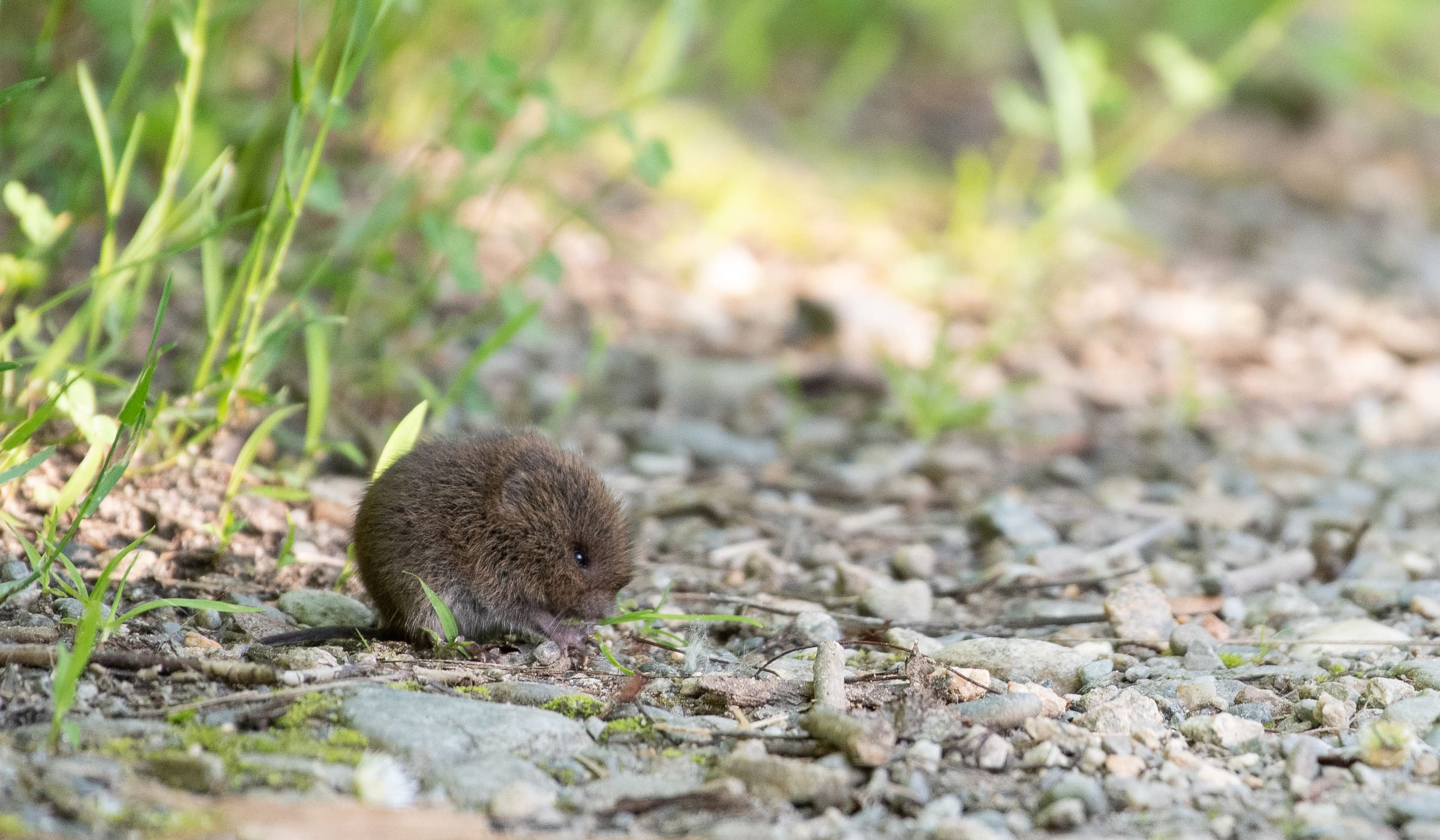
Vole Control
Protect Your Lawn, Bulbs And Shrubs From Voles
Voles do their damage out of sight, in runways under the grass and under snow, chewing roots, bulbs and bark. A spray cannot reach them there. Locked bait stations placed along their runways can.
Know The Difference
Vole Damage Is Easy To Mistake For Something Else
Voles are small, stocky rodents, closer to a mouse with a short tail than to a mole. They stay close to the ground and travel in narrow runways through lawns and mulch. Unlike moles, they do not push up soil mounds, and they eat plants rather than insects.
Most damage shows up after the snow melts, when winter feeding under the snow cover becomes visible. Voles also gnaw the bark at the base of young trees and shrubs, which can girdle and kill them.
- Narrow, winding runways in the grass, often visible in early spring
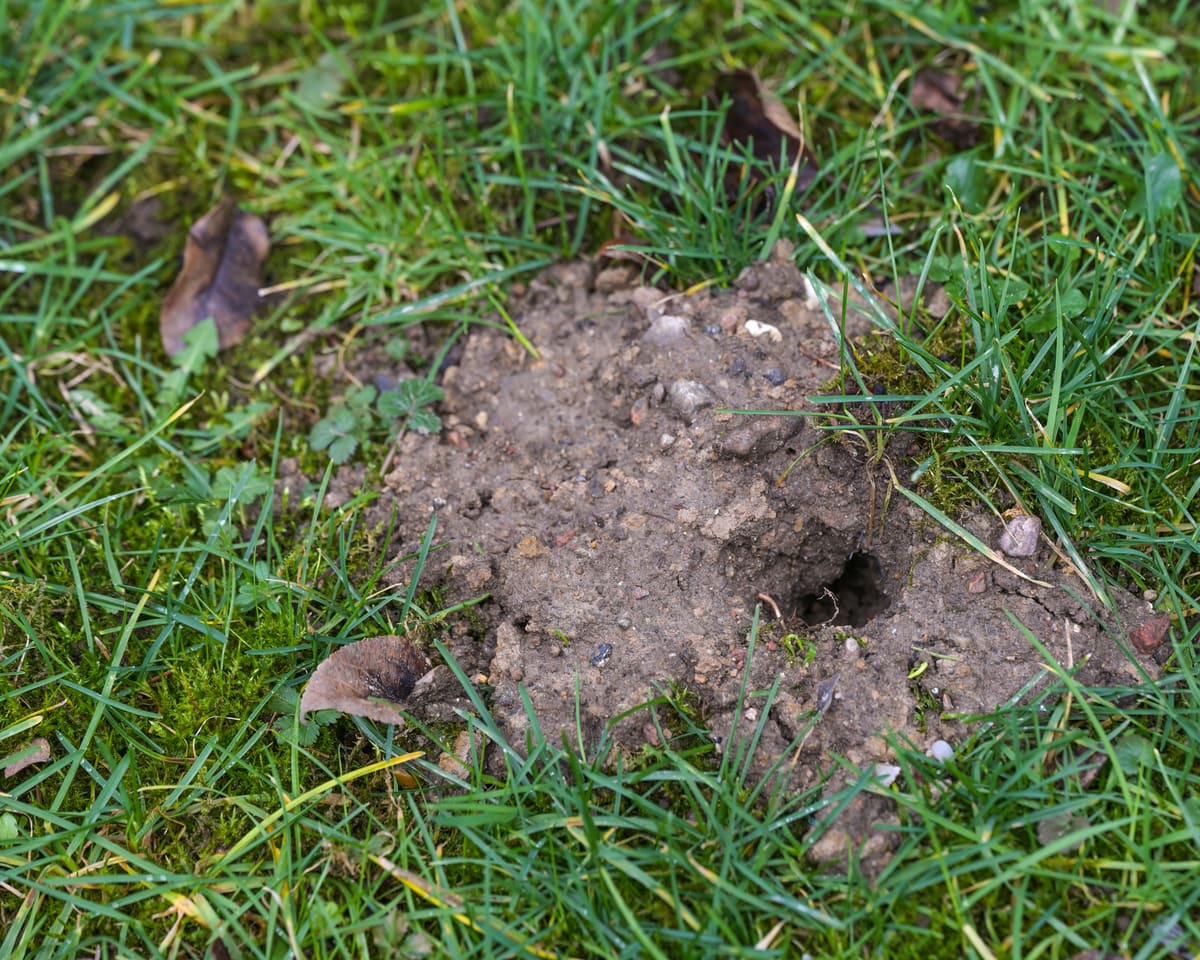
- Small burrow holes about an inch or two across, with no soil mound
- Bark gnawed at the base of young trees and shrubs
- Bulbs, tubers and roots eaten from below
- Patches of lawn that pull up easily because the roots are gone
The Service
We Go Where The Voles Actually Are
-
We Find The Runways
A technician walks your lawn, beds and tree bases looking for runways, burrow holes and bark damage to work out where voles are travelling and feeding.
-
We Set Locked Stations
Bait goes inside tamper-resistant stations placed along the active runways and near the plants at risk. The stations are locked, which helps keep bait away from children, pets and other animals.
-
We Check And Adjust
Stations are checked on a regular schedule and refilled as needed, and we move them as vole activity shifts across the property.
We Protect
What Voles Target First
- Lawns
- Flower Bulbs
- Tree Bases
- Young Shrubs
- Perennials
- Garden Beds & Mulch
Timing
Set Stations Before The Snow
Voles are active all year, but the damage that hurts most happens under winter snow cover, where they feed unseen for weeks. Getting stations in place in fall protects trees and shrubs going into the season, and a spring check catches activity that built up over winter.
Set Expectations
Control, Not A Promise Of Zero Voles
Bait stations bring vole activity under control. They do not promise your yard will never see another vole. Vole numbers depend on grass height, mulch depth, ground cover and neighboring properties, so results vary. Keeping grass short and mulch thin near trunks helps the stations do their job, and we will point out what applies to your property.
Common Questions
Vole Control FAQ
Why doesn't the repellent spray work on voles?
Our repellent works on plants that deer and rabbits browse above ground. Voles do much of their feeding underground and under snow, where a foliar spray cannot reach. That is why vole control uses locked bait stations instead.
How do I know if it is voles and not moles?
Moles push up mounds of soil and eat insects and grubs. Voles leave surface runways and small open holes with no mound, and they eat plant roots, bulbs and bark. Some yards have both, and we can tell you what we see during a walkthrough.
Are the bait stations safe around kids and pets?
The bait sits inside locked, tamper-resistant stations designed to keep it out of reach of children, pets and non-target animals. Tell us about the pets and children on your property and we will position stations with that in mind. Keep the stations closed and undisturbed.
Will this get rid of voles completely?
No service can promise that. Bait stations are designed to bring vole activity under control, and they work best together with habitat changes like shorter grass and thinner mulch. We will not claim your yard will be vole free.
Free Estimates
Keep Pests Out.
Keep Beauty In.
Tell us what is happening in your lawn and beds. We will walk the property, recommend a plan, and give you a number.