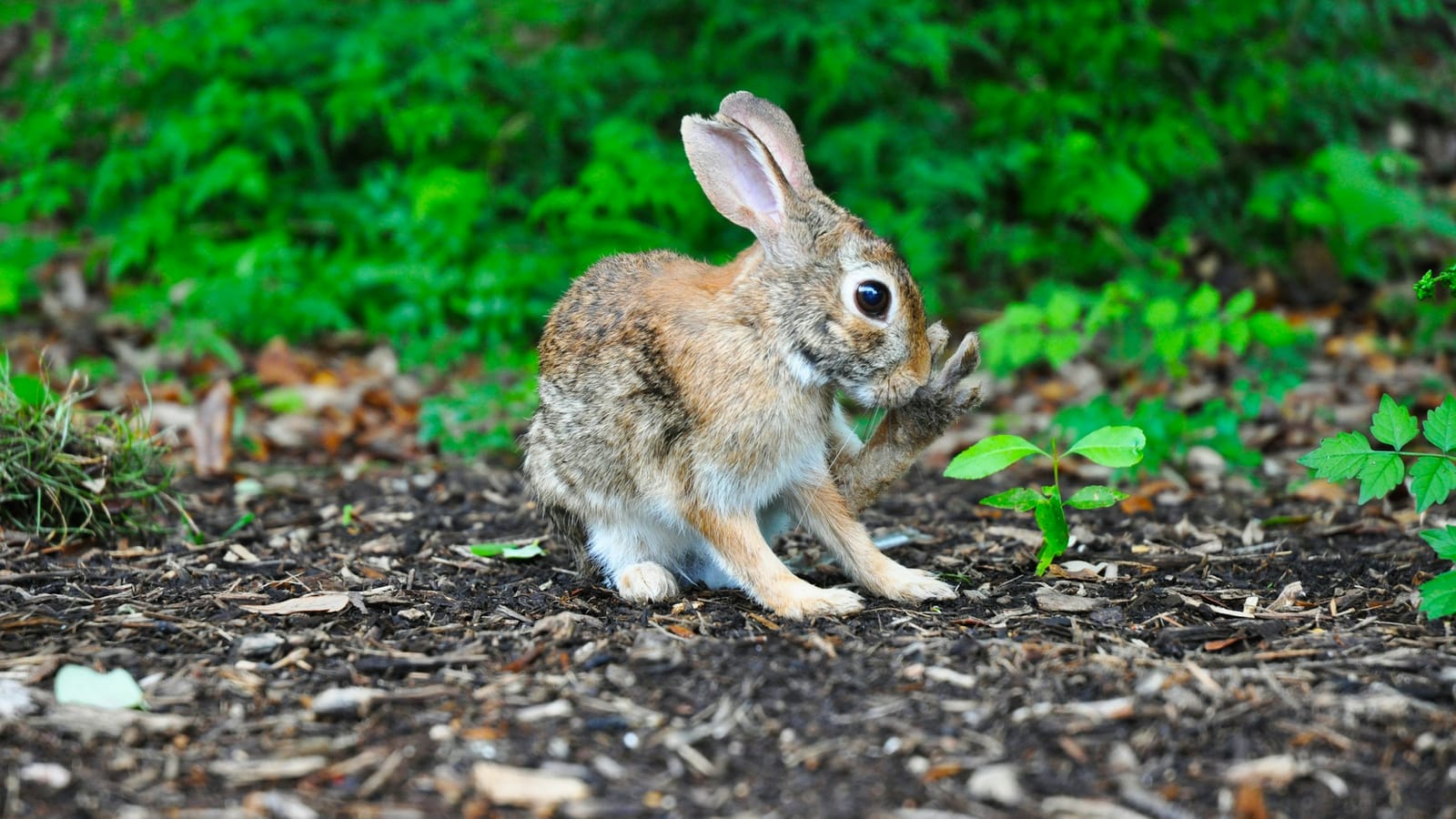
If plants in your yard are getting eaten and you are not sure what is doing it, look at three things: how the stem was cut, how high the damage sits, and what was left behind on the ground. Rabbits make clean, angled cuts low to the soil. Deer tear plants and browse higher. Getting that right first is what makes rabbit repellent in Cincinnati yards actually work.
It sounds like a small detail. It is not. Treating the wrong animal, or treating the right animal at the wrong height, is one of the most common reasons homeowners around Mason, Milford and Anderson Township tell us nothing they tried made a difference.
How can you tell rabbit damage from deer damage?
Look at the cut. Rabbits have sharp upper and lower front teeth that leave a clean cut at about a 45 degree angle, as if the stem was snipped. Deer have no upper front teeth, so they pinch and pull, leaving ragged, torn edges and shredded twig tips. Rabbit damage also stays low, while deer browse much higher.
That tooth difference is described plainly in Ohio State University Extension’s 20 Questions on Plant Diagnosis, and it is the most reliable clue you have. Pick up a damaged stem and look at the end.
A rabbit cut is smooth and slanted. On a tulip shoot, a young coneflower or a bean seedling, it looks almost surgical. Often the top of the plant is lying right next to it, or it is simply gone.
A deer bite is messy. Hosta leaves look torn rather than trimmed. Twig tips on arborvitae and yews look frayed, a bit like a chewed toothpick, because the outer bark got pulled away as the deer yanked the branch.
How high off the ground is the damage?
Rabbit damage almost always sits within about two feet of the ground, a little higher when rabbits are standing on packed snow. Deer browse from roughly knee height up to around six feet. If the damage on a shrub starts at the soil and stops at your shin, think rabbit. If there is a clean line at chest height, think deer.
Penn State Extension’s cottontail rabbit guide puts rabbit feeding mainly within about two and a half feet of the ground, which matches what we see across Clermont and Hamilton counties.
Height is especially useful on shrubs. A row of arborvitae with a browse line at four or five feet, where everything below is thin and everything above is full, is a deer problem. A young shrub with its lowest stems clipped off and the top half untouched is a rabbit problem. When both are happening on the same plant, you have both animals, and that is more common than people expect.
What do rabbit and deer droppings look like?
Rabbit droppings are small, round, dry pellets about the size of a pea, often scattered near the plants they are feeding on or along the edge of a bed. Deer droppings are larger, oval or slightly pointed pellets, usually dropped in a pile of dozens at once. Tracks and droppings together usually settle the question.
Check the mulch at the base of damaged plants and along any path an animal would use to reach the bed, such as a gap in the hedge, the edge of a patio or a fence line. Rabbits like to stay close to cover, so their droppings tend to turn up near shrubs, brush and low evergreens. Deer walk right out into the open.
Could it be voles, not rabbits?
Sometimes. Voles also gnaw bark at the base of young trees and shrubs, especially under snow or thick mulch. Their tooth marks are much narrower than a rabbit's, and the damage is usually at or just below the soil line. Rabbit gnawing sits a bit higher, in patches, with wider marks and droppings nearby.
This matters in winter, when a young maple or crabapple with bark missing at the base could be either animal. Pull the mulch back a few inches from the trunk and look. Narrow grooves below the mulch line and small runways through the grass point to voles. Wider gnaw marks above the mulch with round pellets close by point to rabbits.
What do rabbits target in Cincinnati yards through the year?
In spring and summer, rabbits go after tender growth close to the ground: tulip and crocus shoots, pansies, young perennials, lettuce, beans and other vegetable seedlings. In fall and winter they shift to bark and woody stems, especially young trees and shrubs with thin, smooth bark. Newly planted beds get hit hardest in every season.
That seasonal shift is the part homeowners miss. Rabbits do not take winter off. Once the soft food is gone, a young serviceberry, redbud or fruit tree becomes the meal, and bark gnawed all the way around a small trunk can cost you the tree. The damage often is not noticed until spring, when the plant fails to leaf out.
It also means a rabbit plan looks different from a deer plan. Our rabbit repellent service is applied low, right where rabbits feed, on the beds, borders, vegetable gardens and young trunks they reach. Our deer control service works higher, on the plants deer actually browse.
When does rabbit repellent make sense for a Cincinnati yard?
Rabbit repellent makes sense when you are seeing clean, low cuts on plants you want to keep, when you have new plantings going in, or when young trees and shrubs need protection heading into winter. It works best as a schedule, because new growth and heavy rain both leave plants unprotected between applications.
The repellent we use is all natural and egg based. It gives treated plants a scent and taste rabbits find unpleasant, so they move on and feed somewhere else. It is safe for people, pets, and plants when used as directed. Keep people and pets away from treated areas until dry.
A few honest notes, because we would rather set expectations than oversell:
- Repellent protects the foliage and bark it is applied to. New growth that comes in after a treatment is unprotected until the next one.
- For a small vegetable plot, a low fence of fine mesh with the bottom tight to the ground is a sound option on its own or alongside treatment. Clearing brush piles and weedy edges near the garden also gives rabbits less cover.
- Results vary with rabbit and deer pressure, weather, plant growth and application schedule. Repellent is a deterrent, not a promise that rabbits will never visit.
If deer are part of the picture too, the same logic applies higher up the plant. We covered what to expect from treatment in do deer repellents actually work, and our deer repellent service is built to run alongside rabbit treatment on the same visits.
Not sure which animal is eating your plants?
Have someone walk the property with you. A short look at the cuts, the height of the damage and what is on the ground usually answers it in minutes, and it tells you exactly which plants need treatment and at what height. That is the first thing we do on every estimate visit.
Most of the homes on our residential deer control schedule around Loveland, Batavia, Blue Ash and Northern Kentucky have some mix of rabbit and deer pressure, and the right plan depends on which plants are getting hit and when. If you are tired of replanting the same bed, request a free property estimate and we will show you what is eating your landscaping and how we would protect it.
Frequently Asked Questions
What does rabbit damage look like on plants?
Rabbit damage shows up as stems cut cleanly at a sharp angle, close to the ground. Tulip shoots, pansies, young perennials and vegetable seedlings often look like someone clipped them with pruners. In winter you may also see patches of bark gnawed off the base of young trees and shrubs.
Can rabbits and deer both be damaging the same yard?
Yes, and on a lot of Cincinnati area properties they are. It is common to find clean, low cuts on the tulips and ragged, torn leaves higher up on the hostas in the same bed. That is why we look at the whole property on an estimate before recommending where to treat.
Is rabbit repellent safe around my vegetable garden and pets?
The egg based repellent we apply is safe for people, pets, and plants when used as directed. Keep people and pets away from treated areas until dry. On edible plants, label directions always come first.
When do rabbits do the most damage in Ohio?
Rabbits feed all year. Spring brings the most visible damage to flowers, tulips and vegetable seedlings. Late fall through winter is when they turn to bark and woody stems on young trees and shrubs, and that damage is often the most costly because a girdled young tree may not recover.
Will rabbit repellent keep rabbits out of my yard for good?
No, and nobody should promise that. Repellent is a deterrent. It makes the plants you care about an unappealing meal so rabbits feed somewhere else. A schedule keeps coverage fresh as plants grow and weather wears treatments down.
Header photo by Dave Solce on Unsplash